Thousands of tonnes of undeclared uranium found in DRC cobalt exports
The uranium, hidden inside cobalt shipments and never reported to nuclear regulators, is enough for hundreds to over a thousand nuclear weapons and also threatens miners' health.
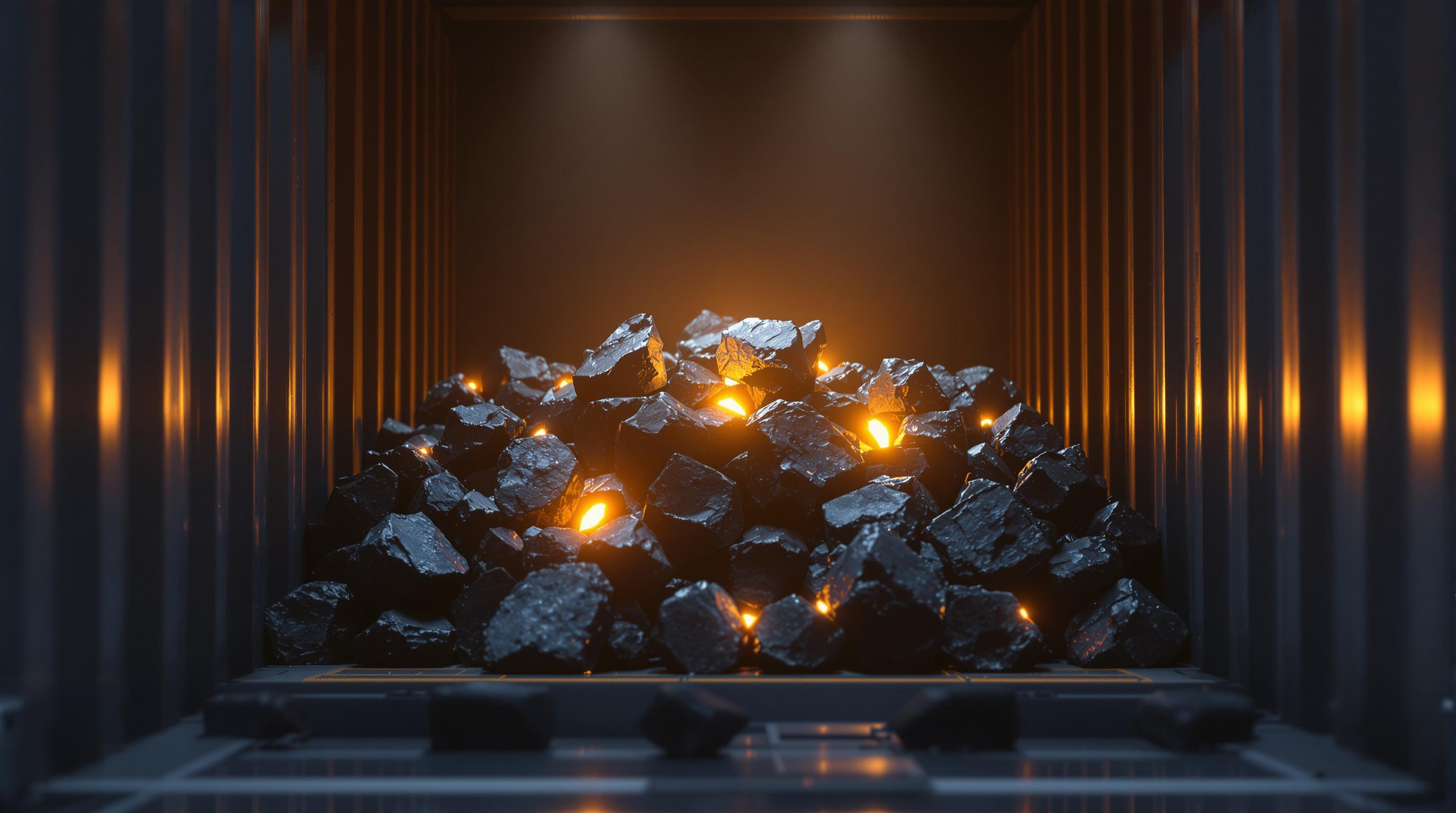
An undeclared byproduct of the cobalt boom
Nuclear engineers at the University of Wisconsin-Madison and Princeton University estimate that between 2,000 and 5,000 tonnes of natural uranium were exported from the Democratic Republic of the Congo between 2000 and 2024, hidden inside shipments of cobalt hydroxide, a raw material used to make lithium-ion batteries. That is roughly 4.4 million to 11 million pounds of uranium, according to the study, published in Nature Communications on July 30, 2026. Less than 10% of it appears to have been publicly declared to the International Atomic Energy Agency (IAEA), the body responsible for tracking uranium worldwide, according to study co-author Sébastien Philippe, a nuclear security expert at UW-Madison.
The scale matters because uranium is the raw material for both nuclear weapons and nuclear power. Philippe says the quantity involved "could be used to produce fissile material for roughly 600 to 1,500 nuclear weapons or fuel a standard light-water nuclear reactor for 10 to 25 years." Because the uranium was never declared, he notes, it has no restrictions on where it ends up: "nobody is going to ask where this uranium is going. It's not on the books." Most of the shipments went to China, which is home to about 95% of the world's cobalt refineries, according to Philippe.
The researchers stress they found no evidence this was done on purpose to smuggle uranium out of the country. But Philippe says the volumes involved exceed what both the DRC and China are supposed to report to the IAEA under international agreements, and co-author Ryan Manzuk, a research fellow in Philippe's group at UW-Madison and Princeton, says failing to declare this uranium is a violation of the Additional Protocol of China's safeguards agreement, the legal instrument that obliges countries to report such material.
Sources 1, 2
How uranium hitches a ride on cobalt
The DRC's southern Copperbelt produces most of the world's mined cobalt, and the region is also unusually rich in uranium, including the Shinkolobwe deposit that supplied uranium ore for the first US nuclear weapons in 1945. Shinkolobwe has been closed by presidential decree since 2004, and the DRC has reported no uranium exports since. But uranium in the region is not confined to that single deposit. It is spread widely through the rock formations that also contain cobalt ore, according to the study.
The chemical explanation lies in the mineral that carries the cobalt. That mineral, called heterogenite, is unusually good at binding other elements to itself, including oxidized forms of uranium, and can accumulate uranium up to 3% of its weight, according to the paper. As Manzuk explains, cobalt and uranium behave similarly during the acid-based process used to concentrate cobalt for shipment, so without a deliberate step to remove it, uranium stays with the cobalt through crushing, leaching, and precipitation into the cobalt-hydroxide product that gets exported. The researchers modeled this process and found that the standard low-cost method refineries use to strip out other impurities removes less than 10% of the uranium present, because uranium and cobalt come out of solution at nearly the same acidity level.
A more thorough removal step exists, using an addition of phosphoric acid, but the study finds it is not standard practice: cumulative export data show that nearly 1,200,000 tonnes of DRC cobalt exports lack evidence of this targeted uranium removal. One documented case shows uranium can be recovered this way: a facility in Finland declared and sold uranium recovered from DRC-origin cobalt between 2010 and 2017, even though the DRC reported no uranium exports during that period. The researchers describe this as one of the only publicly documented instances of DRC uranium being properly placed under international safeguards, despite the fact that the underlying element is expected to be present throughout the industry.
Sources 2, 3
A structural gap in nuclear accounting
The study also identifies what the researchers call a loophole in how uranium is tracked internationally. Manzuk says that even if DRC mines systematically removed uranium to keep their cobalt shipments within radioactivity limits set for international shipping, enough uranium would still reach China each year to make approximately 12 nuclear weapons. In other words, the sheer volume of the DRC's cobalt industry creates an accounting problem regardless of the uranium content of any individual shipment or how aggressively refineries try to strip it out.
Manzuk points to a broader chemical reason this uranium is spreading rather than staying put underground: it has migrated across the region over millions of years, so the same minerals mined for stable lithium-ion batteries now carry elevated uranium levels as a matter of geology, not deliberate extraction.
Sources 2
Health risks and what researchers say should happen next
Beyond the security question, the study estimates that 1,000 to 4,000 tonnes of uranium have likely been discarded into mine tailings, the waste material left over from processing, in chemically mobile forms that can be more easily absorbed by the environment. Manzuk says people are exposed to this uranium while working in the mines, and that it poses an environmental health and safety risk to nearby communities. He cites prior research showing that some miners and community members near DRC mines show signs of uranium exposure beyond levels recommended even for workers in the nuclear industry.
Philippe and Manzuk say the findings point to an urgent need for better tracking. They call for an extensive national audit of mining in the DRC, new rules separating uranium from the cobalt supply chain, systematic measurement of cobalt-hydroxide shipments, and radiation monitoring for workers. Ultimately, the researchers say, preventing further undeclared uranium exports would require refining cobalt into metal within the DRC itself, rather than shipping the less-processed cobalt hydroxide that currently carries uranium out of the country undetected.
The research grew out of a collaboration between the two scientists and investigative journalists from Lighthouse Reports and the Financial Times, which published a companion investigation expanding on the findings the same day the study appeared. The work was funded by the Carnegie Corporation of New York and Princeton University's Center for Policy Research on Energy and the Environment.
Sources 1, 2, 3