German-built rocket reaches orbit from Norway on second try
Spectrum's flight gives Western Europe its first homegrown route to orbit, reducing reliance on launch sites in French Guiana, Florida and Russia.
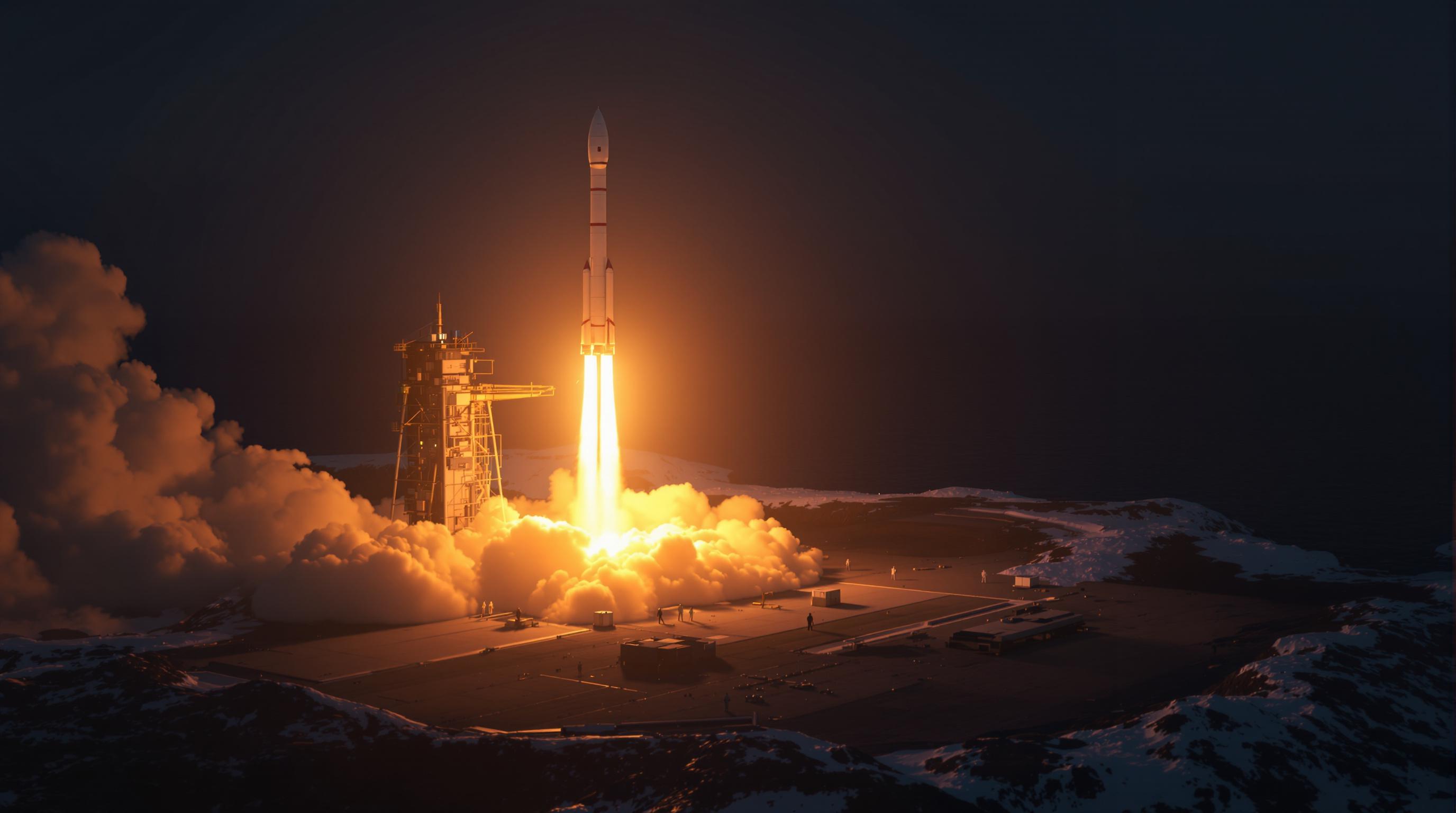
A second attempt succeeds
Isar Aerospace's Spectrum rocket lifted off from Andøya Spaceport in northern Norway on September 5, 2026, and reached orbit a little over seven minutes later. The two-stage rocket, 28 metres tall, is designed to carry satellites weighing up to 1,000 kilograms into low Earth orbit. It settled into an elliptical path around Earth, with its closest approach to the planet estimated at 180 kilometres and its farthest point at 500 kilometres, before firing its engines again to circularize that orbit.
This was Spectrum's second flight. The rocket's first attempt, in March 2025, ended after about 30 seconds when the flight was deliberately terminated and the vehicle fell into the sea. Isar Aerospace had not expected that first flight to reach orbit, and called the 30-second flight a success at the time because it proved the rocket could clear the launch pad. No rocket had previously reached orbit from Western European soil, though rockets have flown to orbit for decades from the Russian part of the continent, at Plesetsk Cosmodrome.
Sources 1, 2, 3
What went wrong the first time, and what changed
An investigation into the first flight's failure was completed within two months. It found that a valve meant to release pressure had opened unintentionally, and that the rocket lost control of its orientation as it began a planned rolling maneuver early in flight. Isar Aerospace applied what it learned to prepare for the second flight, which it named 'Onward and Upward.'
That second flight was repeatedly delayed. It was originally planned for January but was pushed back after a problem with a pressurization valve, then scrubbed multiple times in March due to bad weather and a boat that entered the launch area, then postponed again in April after a leak was found in a pressure vessel made of composite material. A June attempt was called off after the company detected unusual behavior in the rocket's fluid systems. Isar Aerospace's chief engineer, Nikolaos Perakis, said during the eventual launch webcast that the delays led to a stronger outcome: 'We had some setbacks, but we came back stronger from them.'
Sources 2
Cargo on board and what it means for the launch business
Unlike the first flight, which carried no functioning payloads, the second Spectrum flight carried six passengers: five commercial and educational cubesats (small satellites built to a standard size) and one scientific experiment that stayed attached to the rocket rather than being released. The rocket successfully deployed the cubesats after reaching orbit, which Isar Aerospace announced roughly two hours after launch. Reaching orbit and deploying payloads together mark what the company considers full mission success, rather than the partial success declared after the first flight.
Isar Aerospace views Spectrum as a future workhorse for launching small and medium-sized satellites, and says its manufacturing facility near Munich can produce more than 30 of the rockets per year. The flight also serves as a qualification flight within Europe's push for independent access to space. ESA's Director General, Josef Aschbacher, described the launch as a signal of Europe's growing commercial space transportation sector, while ESA's Director of Space Transportation, Géraldine Naja, said the flight would help make Europe's launch services market more diverse regardless of its outcome.
Sources 1, 2
A step in a wider European race
Isar Aerospace was one of five European space transportation companies selected in 2025 for the European Launcher Challenge, a program that requires participating companies to reach orbit no later than 2027 as a first milestone. The Spectrum flight, if it counts as reaching orbit within that program's rules, would satisfy that requirement for Isar Aerospace. Isar Aerospace's chief executive, Daniel Metzler, described the flight as 'a deliberate step toward delivering sovereign access to space for Europe and allied nations,' noting that it came just ten months after the company first proved a launch vehicle could be built and launched from continental European soil.
The company has received support through ESA's Business Incubation Centre and multiple rounds of funding under ESA's Boost! programme, which backs commercial launch initiatives and helped fund both this flight and the scale-up of Isar Aerospace's production facilities. Isar Aerospace operates independently of ESA, which is funded by its 23 member states and has historically launched primarily from French Guiana and Cape Canaveral in Florida.
Sources 1, 2, 3