Beavers' dams could store water and slow wildfires across California's Sierra Nevada
Modeling shows beaver dam-building alone could store 120 million cubic meters of water and create 2,200 square kilometers of fire-resilient land in a region already facing severe drought and wildfire risk.
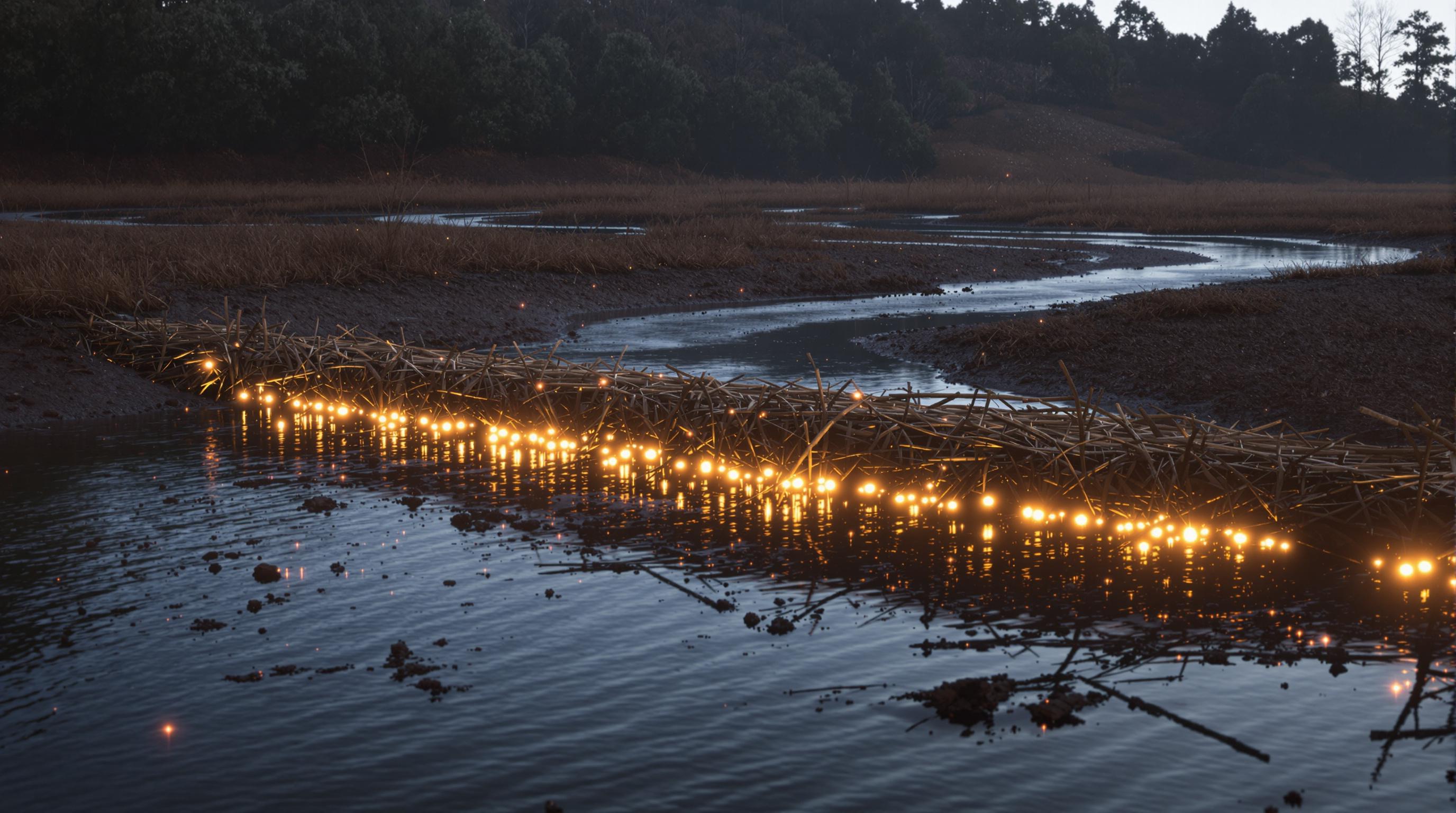
A modeling study finds room for beavers to return
A study published in a peer-reviewed journal modeled how much beaver dam-building capacity remains in California's Sierra Nevada, and what restoring that capacity could do for water storage and wildfire resilience. The researchers estimate that 51% of historical beaver dam-building capacity remains in the region, and that considerable capacity remains in every watershed studied. If that capacity were used, the study's conservative estimates suggest beaver dams could store a total of 120 million cubic meters of surface water and create 2,200 square kilometers of fire-resilient land in areas at high risk of wildfire.
The researchers describe beavers as an ecosystem engineer, an animal that reshapes its physical surroundings in ways that benefit itself and, in this case, many other species. Historically, beaver populations across North America ranged from 60 to 400 million before the fur trade nearly wiped them out; current populations are estimated at 10 to 40 million. In the United States overall, beaver populations remain at about 10% of historical levels, according to the study, and beaver numbers in California specifically have been slow to recover.
The study identified five priority watersheds in the Sierra Nevada that face both high drought risk and high fire risk, and that also have high potential to benefit from beaver conservation and restoration. The researchers note that even in areas where fire and drought are less likely, reestablishing beavers would likely provide similar benefits to water storage and landscape resilience.
Sources 1
How a dam turns a stream into a firebreak
Beavers build dams from stones, mud, and plant material across stream channels, creating ponds and wetlands. They also dig channels that spread out across the surrounding floodplain, which helps spread water more widely across the land beyond the stream itself. This combination of damming and channel-digging slows the movement of water through the landscape, a process the study's authors describe as creating landscape "roughness" that holds water in place instead of letting it drain away quickly.
That stored and slowed water keeps riparian vegetation, the plants growing along stream banks, wet and green even during drought, according to research from NASA and California State University Channel Islands. A study of five large wildfires in the western United States found that riparian areas with beaver damming lost on average only 19% of their greenness during the fires, measured using a satellite-based vegetation index. Riparian areas without beaver damming, by contrast, lost 51% of their greenness on average, and the difference between the two was statistically significant. The comparison suggests that beaver-dammed wetlands are too wet to burn easily, similar to how damp sticks resist catching fire.
The US Forest Service describes the same mechanism in practical terms: beaver dams slow the flow of spring runoff, reserving water for later in the summer when it becomes scarce, and raise the water table to keep water on the landscape year-round. Where beaver populations have not returned, land managers have started building artificial versions of these dams, called beaver dam analogues, using wooden posts and willow branches. In Colorado, one such project built 316 mimicry structures over two years and re-wetted 45 acres of historic wetland, according to the Forest Service, though it does not report fire outcomes tied specifically to that project.
Sources 1, 2, 3
Evidence beyond the Sierra Nevada
Similar patterns have been documented elsewhere. Researcher Alan Puttock of the University of Exeter's Centre for Resilience in Environment, Water and Waste says beaver wetlands in Britain, where beavers were reintroduced to the River Otter in 2015 after being hunted to extinction there roughly 400 years ago, hold about 1,000 cubic meters of water each and reduce peak flows by 30% by retaining it behind leaky dams. Puttock cautions that "one beaver wetland won't solve all of our drought problems," but says that as beaver populations expand alongside other nature-based restoration efforts, landscapes become less prone to drought overall.
In England, aerial footage of the National Trust's Holnicote estate showed rewilded land, where rivers were returned to their natural, winding courses and wetlands restored, remaining green through five heatwaves this summer while surrounding countryside turned parched and brown. Project manager Ben Eardley described the approach as creating "natural sponges in the landscape" that store water during drought and slow it during storms. The National Trust's director of land and nature, Harry Bowell, pointed to a wildfire that destroyed lowland heath at another National Trust estate, Dunwich, the same summer, and called for greater investment in nature-based solutions as climate change increases the frequency of floods, droughts, heatwaves and wildfires.
Fairfax's NASA-published work makes a related point about scale: a single family of beavers can occupy and protect several kilometers of riparian area at low cost, and scaling that up to hundreds or thousands of beaver families could put patches of fireproof wetland across many waterways in a region. The Sierra Nevada modeling study builds on this idea, framing biodiversity conservation and nature-based climate solutions as closely linked rather than separate goals.
Sources 1, 3, 4, 5
What the studies do not settle
The Sierra Nevada study describes its water storage and fire resilience estimates as conservative, but they remain model-based projections of potential capacity rather than measurements of dams that have already been built. Not all beavers build dams; some instead dig burrows into stream banks, particularly in large rivers or lakes where damming is impractical, and the study notes it focused specifically on dam-building activity because its effects are most directly measurable. The researchers also flag that reintroducing beavers can turn intermittent streams into ones that flow year-round, which they say is generally beneficial for reconnecting streams with groundwater and floodplains, but which could affect native species such as desert fish that are adapted to streams that naturally dry up part of the year.
Puttock is direct about the limits of any single intervention, saying no single beaver wetland resolves regional drought on its own, and that benefits emerge only as beaver populations and other wetland restoration expand together. The Guardian's reporting on Holnicote similarly frames rewilding as one nature-based approach among several being weighed against calls from some commentators who blame rewilding for wildfires, without resolving that broader dispute. Across all five sources, the case for beaver-driven and wetland-based fire and drought resilience rests on modeling, satellite vegetation data, and specific restoration case studies, rather than on a single controlled experiment covering all these regions at once.
Sources 1, 4, 5